 Add to Chrome
 Add to Firefox
 Add to Edge
POINTS-Seeker: Towards Training a Multimodal Agentic Search Model from Scratch
Apr 15, 2026
While Large Multimodal Models (LMMs) demonstrate impressive visual perception, they remain epistemically constrained by their static parametric knowledge. To transcend these boundaries, multimodal search models have been adopted to actively interact with the external environment for evidence retrieval. Diverging from prevailing paradigms that merely retrofit general LMMs with search tools as modular extensions, we explore the potential of building a multimodal agentic search model from scratch. Specifically, we make the following contributions: (i) we introduce Agentic Seeding, a dedicated phase designed to weave the foundational precursors necessary for eliciting agentic behaviors; (ii) we uncover a performance bottleneck in long-horizon interactions, where the increasing volume of interaction history overwhelms the model's ability to locate ground-truth evidence. To mitigate this, we propose V-Fold, an adaptive history-aware compression scheme that preserves recent dialogue turns in high fidelity while folding historical context into the visual space via rendering; and (iii) we develop POINTS-Seeker-8B, a state-of-the-art multimodal agentic search model that consistently outperforms existing models across six diverse benchmarks, effectively resolving the challenges of long-horizon, knowledge-intensive visual reasoning.

A Sanity Check on Composed Image Retrieval
Apr 14, 2026Composed Image Retrieval (CIR) aims to retrieve a target image based on a query composed of a reference image, and a relative caption that specifies the desired modification. Despite the rapid development of CIR models, their performance is not well characterized by existing benchmarks, which inherently contain indeterminate queries degrading the evaluation (i.e., multiple candidate images, rather than solely the target image, meet the query criteria), and have not considered their effectiveness in the context of the multi-round system. Motivated by this, we consider improving the evaluation procedure from two aspects: 1) we introduce FISD, a Fully-Informed Semantically-Diverse benchmark, which employs generative models to precisely control the variables of reference-target image pairs, enabling a more accurate evaluation of CIR methods across six dimensions, without query ambiguity; 2) we propose an automatic multi-round agentic evaluation framework to probe the potential of the existing models in the interactive scenarios. By observing how models adapt and refine their choices over successive rounds of queries, this framework provides a more realistic appraisal of their efficacy in practical applications. Extensive experiments and comparisons prove the value of our novel evaluation on typical CIR methods.
POINTS-Long: Adaptive Dual-Mode Visual Reasoning in MLLMs
Apr 13, 2026Multimodal Large Language Models (MLLMs) have recently demonstrated remarkable capabilities in cross-modal understanding and generation. However, the rapid growth of visual token sequences--especially in long-video and streaming scenarios--poses a major challenge to their scalability and real-world deployment. Thus, we introduce POINTS-Long, a native dual-mode MLLM featuring dynamic visual token scaling inspired by the human visual system. The model supports two complementary perception modes: focus mode and standby mode, enabling users to dynamically trade off efficiency and accuracy during inference. On fine-grained visual tasks, the focus mode retains the optimal performance, while on long-form general visual understanding, the standby mode retains 97.7-99.7% of the original accuracy using only 1/40-1/10th of the visual tokens. Moreover, POINTS-Long natively supports streaming visual understanding via a dynamically detachable KV-cache design, allowing efficient maintenance of ultra-long visual memory. Our work provides new insights into the design of future MLLMs and lays the foundation for adaptive and efficient long-form visual understanding.
VersaViT: Enhancing MLLM Vision Backbones via Task-Guided Optimization
Feb 10, 2026Multimodal Large Language Models (MLLMs) have recently achieved remarkable success in visual-language understanding, demonstrating superior high-level semantic alignment within their vision encoders. An important question thus arises: Can these encoders serve as versatile vision backbones, capable of reliably performing classic vision-centric tasks as well? To address the question, we make the following contributions: (i) we identify that the vision encoders within MLLMs exhibit deficiencies in their dense feature representations, as evidenced by their suboptimal performance on dense prediction tasks (e.g., semantic segmentation, depth estimation); (ii) we propose VersaViT, a well-rounded vision transformer that instantiates a novel multi-task framework for collaborative post-training. This framework facilitates the optimization of the vision backbone via lightweight task heads with multi-granularity supervision; (iii) extensive experiments across various downstream tasks demonstrate the effectiveness of our method, yielding a versatile vision backbone suited for both language-mediated reasoning and pixel-level understanding.
POINTS-GUI-G: GUI-Grounding Journey
Feb 06, 2026The rapid advancement of vision-language models has catalyzed the emergence of GUI agents, which hold immense potential for automating complex tasks, from online shopping to flight booking, thereby alleviating the burden of repetitive digital workflows. As a foundational capability, GUI grounding is typically established as a prerequisite for end-to-end task execution. It enables models to precisely locate interface elements, such as text and icons, to perform accurate operations like clicking and typing. Unlike prior works that fine-tune models already possessing strong spatial awareness (e.g., Qwen3-VL), we aim to master the full technical pipeline by starting from a base model with minimal grounding ability, such as POINTS-1.5. We introduce POINTS-GUI-G-8B, which achieves state-of-the-art performance with scores of 59.9 on ScreenSpot-Pro, 66.0 on OSWorld-G, 95.7 on ScreenSpot-v2, and 49.9 on UI-Vision. Our model's success is driven by three key factors: (1) Refined Data Engineering, involving the unification of diverse open-source datasets format alongside sophisticated strategies for augmentation, filtering, and difficulty grading; (2) Improved Training Strategies, including continuous fine-tuning of the vision encoder to enhance perceptual accuracy and maintaining resolution consistency between training and inference; and (3) Reinforcement Learning (RL) with Verifiable Rewards. While RL is traditionally used to bolster reasoning, we demonstrate that it significantly improves precision in the perception-intensive GUI grounding task. Furthermore, GUI grounding provides a natural advantage for RL, as rewards are easily verifiable and highly accurate.
Learning Streaming Video Representation via Multitask Training
Apr 28, 2025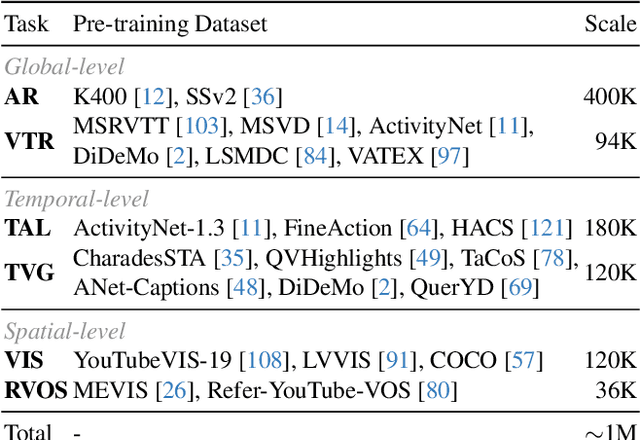
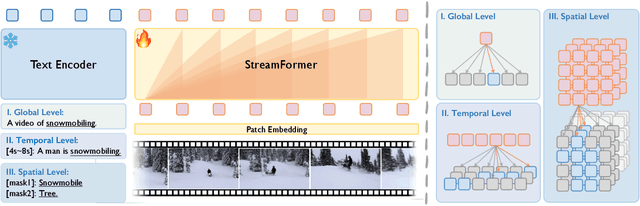
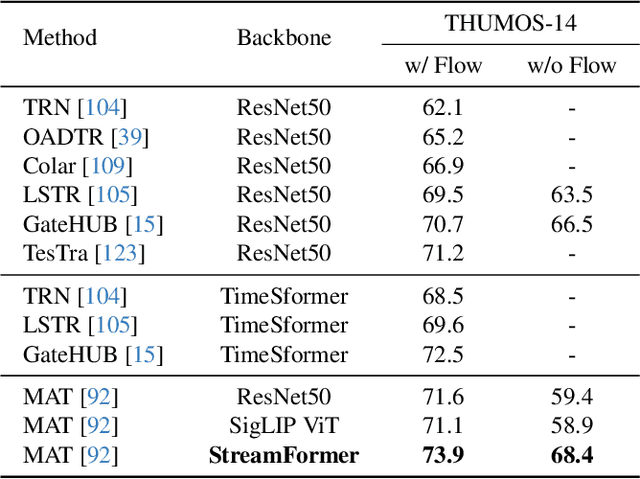
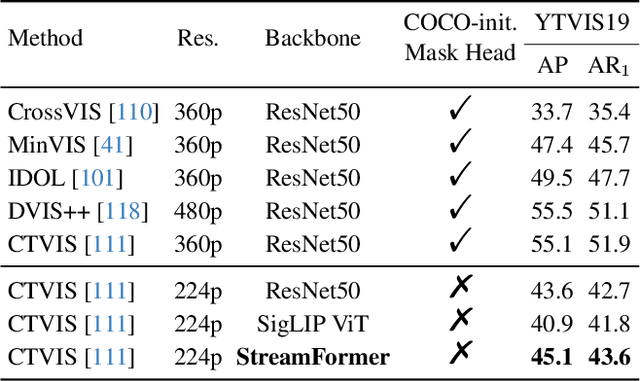
Understanding continuous video streams plays a fundamental role in real-time applications including embodied AI and autonomous driving. Unlike offline video understanding, streaming video understanding requires the ability to process video streams frame by frame, preserve historical information, and make low-latency decisions.To address these challenges, our main contributions are three-fold. (i) We develop a novel streaming video backbone, termed as StreamFormer, by incorporating causal temporal attention into a pre-trained vision transformer. This enables efficient streaming video processing while maintaining image representation capability.(ii) To train StreamFormer, we propose to unify diverse spatial-temporal video understanding tasks within a multitask visual-language alignment framework. Hence, StreamFormer learns global semantics, temporal dynamics, and fine-grained spatial relationships simultaneously. (iii) We conduct extensive experiments on online action detection, online video instance segmentation, and video question answering. StreamFormer achieves competitive results while maintaining efficiency, demonstrating its potential for real-time applications.
LamRA: Large Multimodal Model as Your Advanced Retrieval Assistant
Dec 02, 2024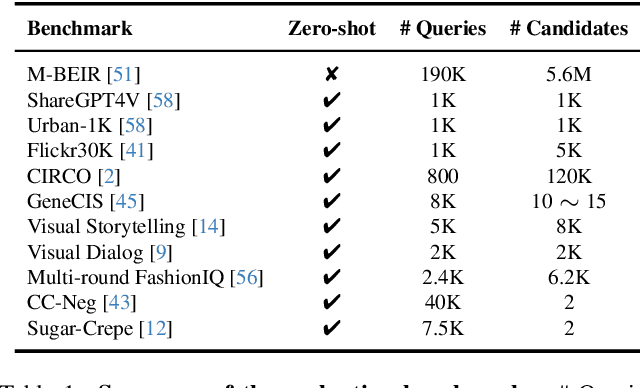
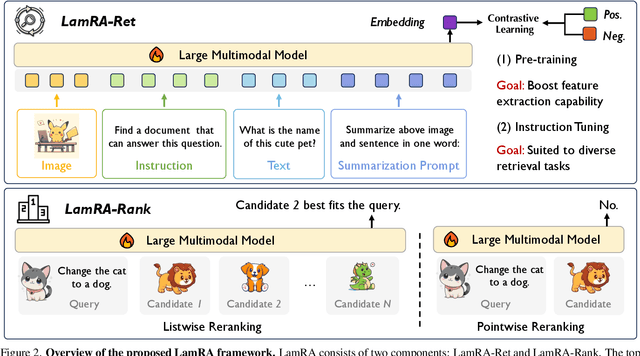
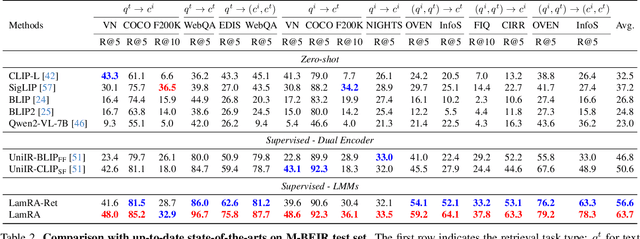
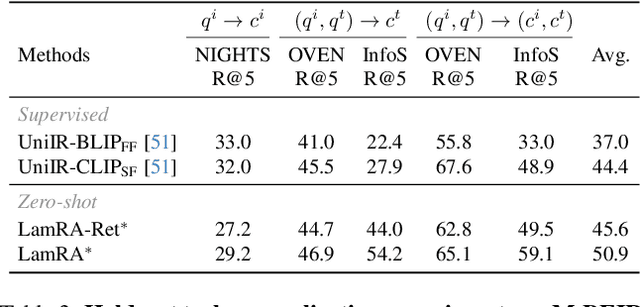
With the rapid advancement of multimodal information retrieval, increasingly complex retrieval tasks have emerged. Existing methods predominately rely on task-specific fine-tuning of vision-language models, often those trained with image-text contrastive learning. In this paper, we explore the possibility of re-purposing generative Large Multimodal Models (LMMs) for retrieval. This approach enables unifying all retrieval tasks under the same formulation and, more importantly, allows for extrapolation towards unseen retrieval tasks without additional training. Our contributions can be summarised in the following aspects: (i) We introduce LamRA, a versatile framework designed to empower LMMs with sophisticated retrieval and reranking capabilities. (ii) For retrieval, we adopt a two-stage training strategy comprising language-only pre-training and multimodal instruction tuning to progressively enhance LMM's retrieval performance. (iii) For reranking, we employ joint training for both pointwise and listwise reranking, offering two distinct ways to further boost the retrieval performance. (iv) Extensive experimental results underscore the efficacy of our method in handling more than ten retrieval tasks, demonstrating robust performance in both supervised and zero-shot settings, including scenarios involving previously unseen retrieval tasks.
Inhomogeneous illuminated image enhancement under extremely low visibility condition
Apr 26, 2024


Imaging through fog significantly impacts fields such as object detection and recognition. In conditions of extremely low visibility, essential image information can be obscured, rendering standard extraction methods ineffective. Traditional digital processing techniques, such as histogram stretching, aim to mitigate fog effects by enhancing object light contrast diminished by atmospheric scattering. However, these methods often experience reduce effectiveness under inhomogeneous illumination. This paper introduces a novel approach that adaptively filters background illumination under extremely low visibility and preserve only the essential signal information. Additionally, we employ a visual optimization strategy based on image gradients to eliminate grayscale banding. Finally, the image is transformed to achieve high contrast and maintain fidelity to the original information through maximum histogram equalization. Our proposed method significantly enhances signal clarity in conditions of extremely low visibility and outperforms existing algorithms.
Harnessing Optical Imaging Limit through Atmospheric Scattering Media
Apr 23, 2024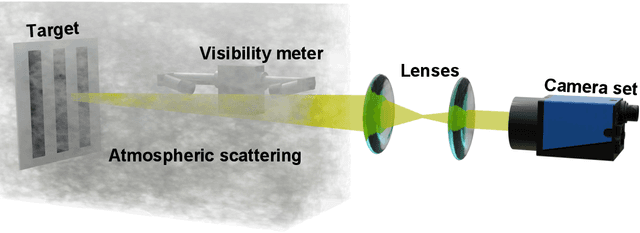
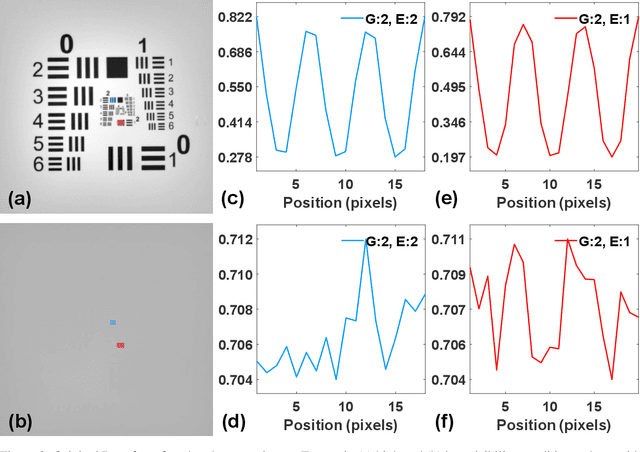
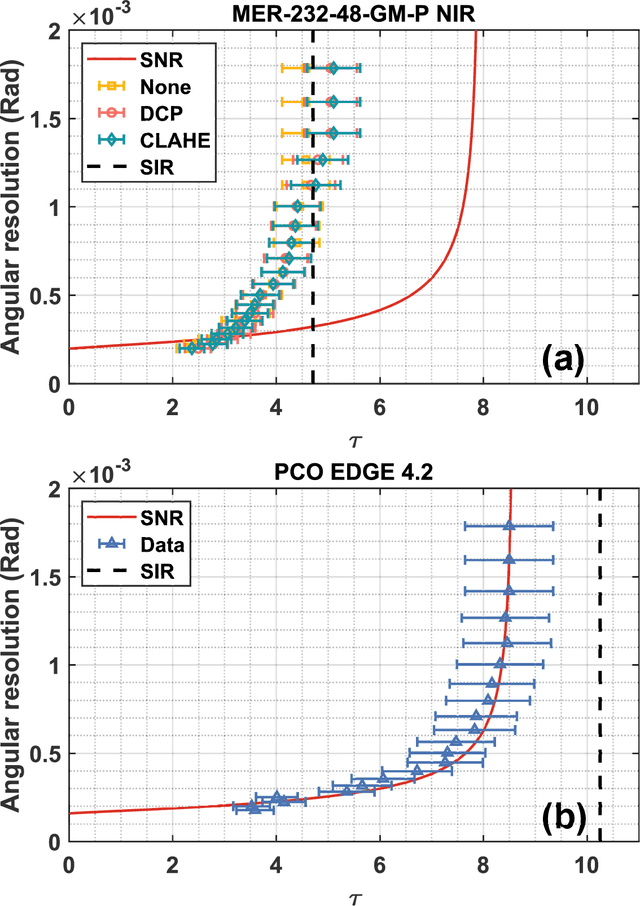
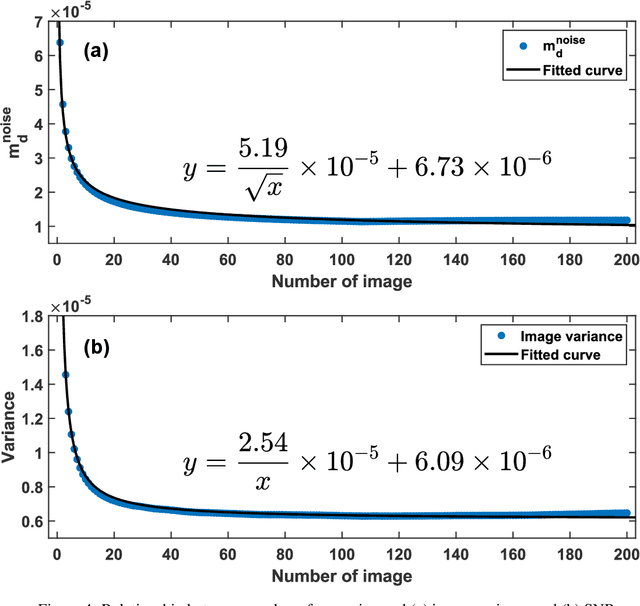
Recording and identifying faint objects through atmospheric scattering media by an optical system are fundamentally interesting and technologically important. In this work, we introduce a comprehensive model that incorporates contributions from target characteristics, atmospheric effects, imaging system, digital processing, and visual perception to assess the ultimate perceptible limit of geometrical imaging, specifically the angular resolution at the boundary of visible distance. The model allows to reevaluate the effectiveness of conventional imaging recording, processing, and perception and to analyze the limiting factors that constrain image recognition capabilities in atmospheric media. The simulations were compared with the experimental results measured in a fog chamber and outdoor settings. The results reveal general good agreement between analysis and experimental, pointing out the way to harnessing the physical limit for optical imaging in scattering media. An immediate application of the study is the extension of the image range by an amount of 1.2 times with noise reduction via multi-frame averaging, hence greatly enhancing the capability of optical imaging in the atmosphere.
Audio-Visual Segmentation via Unlabeled Frame Exploitation
Mar 17, 2024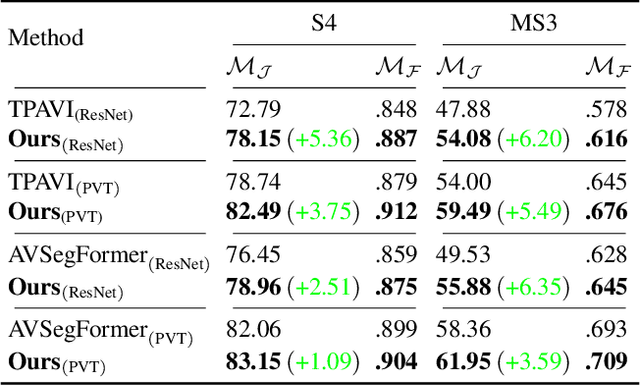
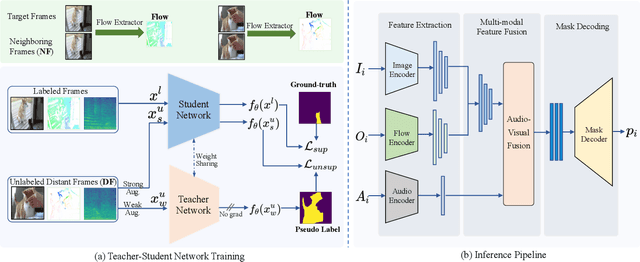
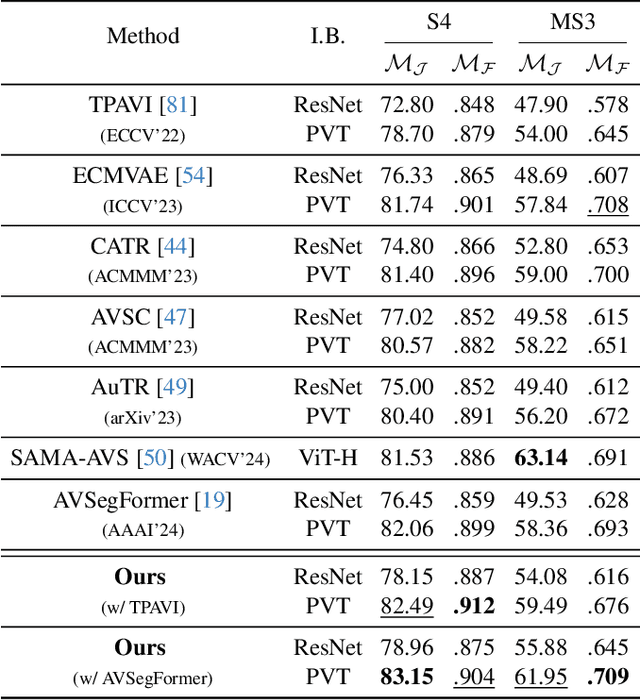
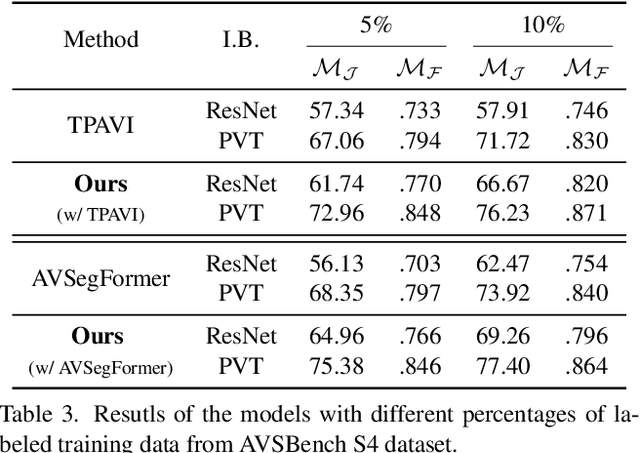
Audio-visual segmentation (AVS) aims to segment the sounding objects in video frames. Although great progress has been witnessed, we experimentally reveal that current methods reach marginal performance gain within the use of the unlabeled frames, leading to the underutilization issue. To fully explore the potential of the unlabeled frames for AVS, we explicitly divide them into two categories based on their temporal characteristics, i.e., neighboring frame (NF) and distant frame (DF). NFs, temporally adjacent to the labeled frame, often contain rich motion information that assists in the accurate localization of sounding objects. Contrary to NFs, DFs have long temporal distances from the labeled frame, which share semantic-similar objects with appearance variations. Considering their unique characteristics, we propose a versatile framework that effectively leverages them to tackle AVS. Specifically, for NFs, we exploit the motion cues as the dynamic guidance to improve the objectness localization. Besides, we exploit the semantic cues in DFs by treating them as valid augmentations to the labeled frames, which are then used to enrich data diversity in a self-training manner. Extensive experimental results demonstrate the versatility and superiority of our method, unleashing the power of the abundant unlabeled frames.